When somebody you care about is being in a cell, the clock feels loud. You want them home, you desire a strategy, and you promptly find out the numbers you are dealing with. Juries established bail amounts based upon the charge, the individual's ties to the area, previous background, and statutory standards. Bond in a misdemeanor situation can be a couple of thousand bucks. For a low-level felony, it could be in the tens of thousands. Serious felonies regularly land in the six-figure range. A lot of families do not have that sort of cash money available on a weeknight. That is why bail bond firms exist and why layaway plan have ended up being a lifeline.
I have actually sat with parents, companions, and pals in confined bond workplaces at twelve o'clock at night, sorting out whether a 10 percent costs on a 50,000-dollar bond is workable, or if we need to sew with each other a payment plan that gets the person out while keeping the family afloat. The selections are genuine, the terms matter, and the downstream responsibilities are frequently misconstrued. This guide lays out how bail bond repayment intends work, what drives approval, and just how to secure on your own while obtaining a person home in time to maintain a job or look after kids.
How bail bonds and costs really work
A bail bond is a guaranty contract. The court desires a warranty the defendant will show up. A bail bond firm, backed by a surety insurance firm, assures the court that if the defendant fails to appear, the complete bail amount will be paid. In exchange, you pay the bondsman a cost, commonly called the premium, and sometimes supply collateral. The costs is generally a portion of the total bond. In numerous states it is regulated. You see 10 percent usually, but it differs. California companies frequently charge 8 to 10 percent. Florida is regulated at 10 percent for the majority of bonds with a minimum cost. Some states enable tiered prices based upon bond size or risk.
That costs is not a deposit. It is the cost of the service and does not get refunded at the end of the situation, also if all court appearances are made. If the bond is 50,000 bucks and the costs is 10 percent, the fee is 5,000 bucks. That is the baseline expense before we talk about any kind of layaway plan. On top of the premium, you might see line products like a bond declaring fee, a general practitioner surveillance charge if called for by the court, or a notary cost. In well-run agencies, these attachments are moderate and disclosed in composing. If they are not, ask.
When clients ask why the fee exists if the individual mosts likely to every court day, the brief version is that the bondsman is underwriting threat, carrying out administrative work, and committing to pay the full amount if something fails. The surety insurer provides the financial backing and sets underwriting rules, much like a car insurance company sets that can get coverage.
Why payment plans exist and when they make sense
Even a regulated costs can be a heavy lift. Households typically need a person out quickly to prevent shedding a work or a house, yet payday is a week out and charge card are near the restriction. Layaway plan link that space. Rather than requiring the complete premium upfront, the bondsman takes a down payment and spreads out the remainder over weeks or months. In my experience, one of the most typical structures involve a 10 to 30 percent down payment on the costs with regular or once every two weeks installations that align with pay cycles.
Payment strategies make sense when the launch is time sensitive, the costs is large relative to available money, and the guarantors have trustworthy revenue. They may not be necessary for tiny bonds or when a family can pay the charge in one shot without endangering lease, utilities, or groceries. They are also not an alternative to collateral. If the case or the accused is high risk, the firm might still require a secured interest in a cars and truck or residential property even if you are on a plan.
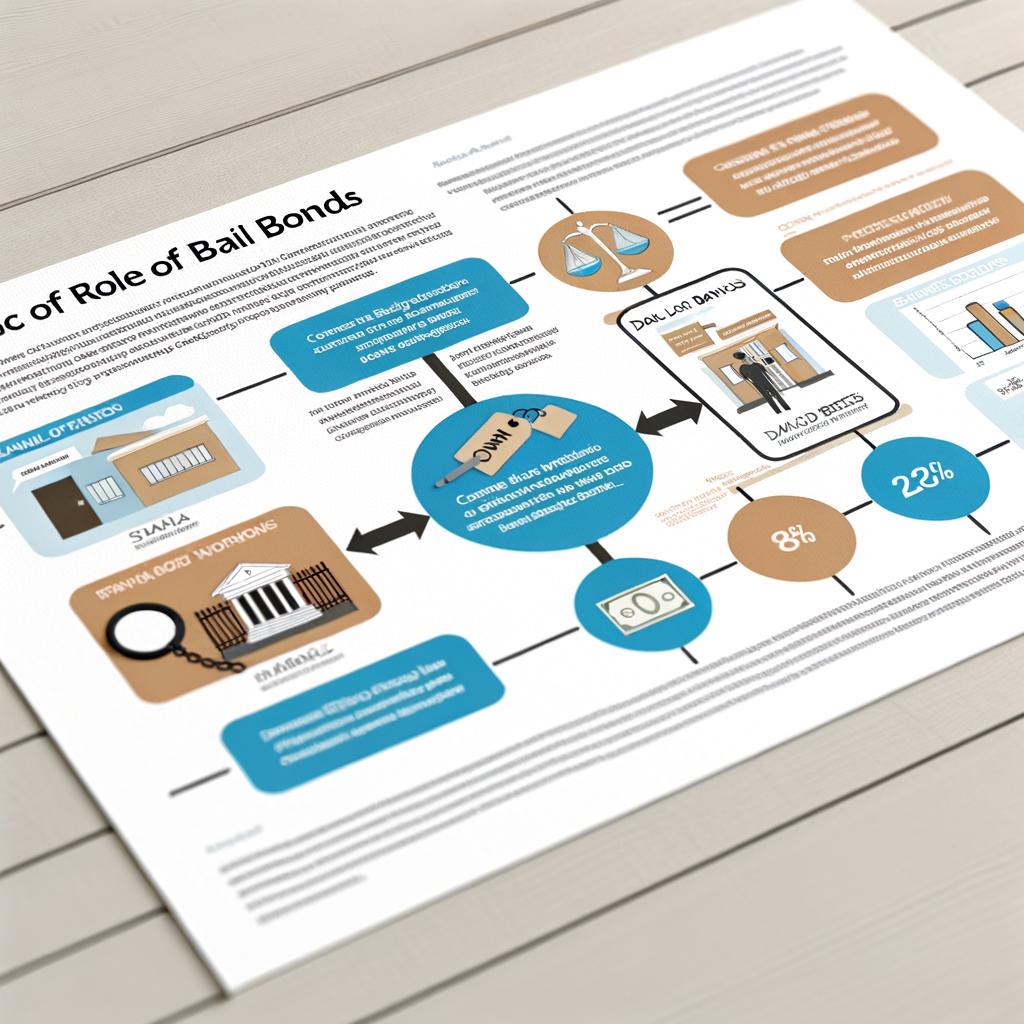
The core components of a normal bail bond settlement plan
A bond contract has several moving components, yet 3 specify whether a plan is convenient: down payment, schedule, and security.
Down payment: Agencies typically desire sufficient in advance to cover instant prices and minimize exposure. For a 5,000-dollar costs, I frequently see 1,000 to 2,000 bucks due at finalizing. Some agencies will go lower to 500 dollars if there are solid co-signers. The deposit is determined by state policies, company policy, and the file's danger rating.
Schedule: Installments track your income rhythm. Weekly settlements maintain balances low and failure threat very little. Biweekly is basic for wage earners. Month-to-month can work for salaried co-signers or when cash flow is uneven, as https://squareblogs.net/vaginaqoye/browsing-your-choices-for-million-dollar-bail-bonds-in-la an example job workers. Timetables usually run 3 to year. Shorter terms reduce money fees. Longer terms lower the settlement however typically set you back even more overall.
Security: Think about safety and security in layers. First, you have a co-signer, also called an indemnitor, that guarantees to be economically liable if the accused misses out on court or the layaway plan defaults. Solid co-signers have stable earnings, tidy credit scores, and verifiable addresses. Second, collateral can be put against an automobile title, a piece of realty, or a money down payment. Not every plan requires security, but security can transform a "no" into a "yes," or a 2,000-dollar deposit into 800 dollars.
Documentation rounds out the strategy: government ID, proof of revenue, evidence of house, and, if security is entailed, title documents or home mortgage declarations. The company will certainly likewise request get in touch with recommendations. These are not just politeness calls. If a court date is missed, representatives will call everyone on that sheet.

How approval choices are made
Underwriting on bail bonds looks a lot like customer lending, yet with a criminal court overlay. The firm considers the following:
- The accused's account: ties to the area, employment, prior failures to appear, the nature of the cost, migration status, and whether the court has enforced conditions like general practitioner or drug testing. The co-signer's profile: work stability, income-to-payment ratio, real estate stability, and previous experience with bonds. Someone who has actually successfully indemnified a bond prior to is a better risk. The collateral provided: clear title to a car worth greater than the staying premium, equity in a home, or money on deposit. Security is evaluated at a discount rate. A vehicle with a private-party value of 8,000 dollars might be counted at 4,000 to 5,000 bucks to develop a margin of safety. Payment logistics: how repayments will be made, whether autopay can be established, and the co-signer's performance history with comparable obligations.
Agencies differ in hunger. Some like lots of smaller sized bonds on brief plans. Others focus on high-dollar bonds with solid security. If one firm decreases your strategy, one more could accept it with a different structure.
Common layaway plan frameworks you will encounter
Straight installment plan: You put down part of the premium and pay the rest in equal installations over a fixed term. This is the most usual strategy. Expect a straightforward rate of interest charge or a level plan charge if your state allows financing fees. Ask whether there is a discount rate for paying early.
Step-up strategy: The preliminary payments are smaller for a month or two, then tip up. This matches seasonal job or families waiting on a tax refund. The compromise is normally a longer term or a somewhat higher total cost.
Balloon strategy: You make low payments up until a well-known cash occasion, then make one larger "balloon" repayment. I see this made use of when someone is marketing a car or expecting an insurance coverage dispensation. Balloon strategies can be dangerous if the occasion falls through, so companies will certainly request for proof.
Co-signer divided strategy: Two or even more co-signers separate the settlements. This decreases stress on one person and can improve approval chances. The agreement will certainly still hold each co-signer collectively accountable if the others stop working to pay.
Hybrid with security launch: You promise a lorry and repayments are drafted weekly. When you hit a target paid amount, the lien on the car is launched although the situation stays open. This framework compensates on-time payment and lowers friction.
What it actually costs over time
The costs is the anchor expense. On top of that, financed strategies can lug costs. Some states cap or forbid financing fees linked to bail bonds. Others leave it to market experiment basic consumer finance regulations in play. In states that permit it, I have seen month-to-month prices similar to customer installment finances, in addition to flat administrative charges. That implies a 5,000-dollar costs financed over 10 months could cost an added 200 to 600 dollars, sometimes much more, depending on policy and regulation.
Transparent companies give you an amortization timetable or at least a payoff chart. If you plan to pay the equilibrium early, ask whether the money charge is prorated or flat. I have actually seen individuals overpay because they thought the cost would shrink. If the plan utilizes a flat fee, there may be little or no financial savings for very early reward. If it utilizes daily accrual, paying early can save genuine money.
Late costs can add up. A typical pattern is a 5 to 10 percent late fee on the missed out on installation after a moratorium of a few days. Persistent lateness can activate a default, which can bring about collateral activity or a notice to the court. You do not desire repayment troubles to end up being case problems.
Collateral, liens, and what "protection" truly means
Collateral is not an idea. When you pledge collateral, you generally sign a safety and security arrangement and, for cars, the firm records a lien with the DMV. Genuine estate, a deed of depend on or home mortgage can be videotaped. If the plan defaults or the accused stops working to appear, the agency has the legal right to take or confiscate on the security to satisfy the financial debt. That appears rough since it is. The agreement will spell out the steps, consisting of notification demands and any kind of right to cure.
People frequently ask if a co-signer can back out. Not easily. When the bond messages, the co-signer's commitment is energetic till the bond is pardoned by the court and the economic commitments to the agency are pleased. Exoneration occurs when the instance concludes or the court or else releases the bond. If the offender is re-arrested on the very same instance or the court revokes bail, the bond can be pardoned under certain problems, yet you might still owe the unsettled costs and fees.
For cars, be clear on whether the lien protects against sale or re-finance. In most states, you can not move title till the lien is released. Genuine estate, a taped lien can make complex refinancing and will show up in a title search. If you prepare for a refinance, tell the firm ahead of time. Some will momentarily subordinate or issue a partial release if you are well paid down, however plan on paperwork and time.
Responsibilities that kick in after release
The offender should comply with every court order and appear for every date. The co-signer should keep get in touch with details present, monitor court days, and pay the intend on schedule. If the court transforms a date without notice, the accused must still reveal. The majority of jurisdictions now have on the internet websites to examine hearing routines. Use them. Put dates in 3 schedules and established reminders.
If the accused misses court inadvertently, call the attorney and the bail bondsman right away. In many courts, a failure to appear can be cured within a brief window by showing up and asking for the bench warrant to be remembered. Waiting transforms a fixable trouble into a major situation. The company's skip tracing team is not the enemy, yet their work is to decrease risk. Cooperating early keeps prices down and prevents collateral actions.
Practical ideas when you are under pressure
- Ask for a created, all-in cost before you authorize. That suggests costs, charges, financing fees, and the total amount of settlements under the plan. If the agency is transparent, they will certainly lay it out without hedging. Match the plan to your paycheck rhythm, not the firm's default. A plan you can maintain for 20 weeks defeats a strategy you miss in week three. Keep a log. Record every repayment made, receipt number, and the name of the person you spoke with. If a conflict occurs, your notes shorten the argument. Use autopay if your spending plan allows it, however keep a pillow. Decreased autopay can acquire late charges swiftly. If a payment will be brief, call ahead and ask for a single expansion in writing. Confirm the lien launch procedure at the beginning. Know what milestone triggers launch of your car or residential or commercial property and what documentation you will receive.
Edge cases and tough lessons
Out-of-county or out-of-state cases: If the offender is detained in one region on a warrant from another, your bond may require transfer or a second publishing. Layaway plan can cover these, however timelines get long and transport logistics issue. Ask the firm regarding approximated release times and whether they can collaborate both ends.
Immigration holds: If the accused has an ICE detainer, publishing a state bail bond might not lead to release to the street. They might be transferred to government custodianship. In that situation, paying a premium for a state bond can be a waste. Reputable firms will certainly ask about migration status and check for holds before publishing. Share what you know.
Probation or parole holds: Similar to immigration holds, probation or parole violations can keep someone captive also if the new instance bail is posted. Coordinate with the defense lawyer or the monitoring policeman prior to committing to a premium.
Multiple open cases: Courts can set bail on each situation. You may require to bond greater than one case to safeguard release. Strategize with advice regarding which instance to post initially. Layaway plan can pile, yet that raises complete responsibility and risk.
High-risk conditions: GPS keeping track of, alcohol scram tools, or home detention add prices that are separate from the bond premium. These solutions typically require their own agreements and down payments. Do not allow those surprise you after you have actually devoted to a plan.
How to compare firms without shedding time
Reputation matters. You want a firm that answers the phone, explains terms without lingo, and complies with the guidelines. Try to find a certificate number presented on the web site and agreement. Quick questions can divide experts from pretenders: what is your costs rate on a 15,000-dollar bond in this area, what is your minimum deposit for a layaway plan, and do you have any money costs? If the answers come fast and constant with state norms, you are on solid ground.
Speed additionally matters, yet speed without quality can be costly. A firm promising immediate authorization without any documentation either has unusual versatility or plans to demand even more after the truth. If two companies offer similar pricing, select the one that provides a clean written agreement, a payment timetable you can maintain, and a clear plan on collateral release. Ask whether they report to debt bureaus. Most do not, yet some third-party financing arrangements might.
Working with the defense attorney
An excellent defense attorney can assist shape terms indirectly. If guidance can encourage the court to lower bond at a review hearing, your premium and strategy reduce accordingly. If counsel can obtain the situation calendared quickly, the bond may be vindicated much faster, ending your commitment sooner. Share layaway plan details with the lawyer so they can factor the bond timeline right into situation method. If the court enforces conditions that intimidate work, guidance can ask for alterations. An easy change from day-to-day check-ins to weekly can imply the difference between keeping and shedding a job, which influences both court appearance stability and your ability to pay.
What happens if things go wrong
Missed repayments: Agencies have internal timelines. After a missed installment, you generally obtain a politeness telephone call, then a late notice with a fee, and after a defined duration, a default notice. Default can set off service charges, a need for full equilibrium, or, in severe situations, an activity to surrender the bond. The best relocation is to call before the due date if a payment will be late. Agencies are even more adaptable with heads-up communication.
Failure to show up: If the defendant misses court, the court can provide a bench warrant and start a clock toward forfeit. The agency has to either return the accused to guardianship or pay the complete bond. This is where expenses intensify. Costs for recuperation efforts, traveling, and court activities can be billed to the co-signers per the agreement. If the offender returns promptly and the court vacates the loss, fees can be consisted of. Waiting transforms a contained issue into a security crisis.
Case rejected or bond pardoned: Once the court pardons the bond, your responsibility to the court ends. Economically, you still owe any kind of unsettled costs and legal costs to the firm. Security is released when both conditions are met. Request for composed verification of exoneration and a lien launch letter, and keep them. If a lien does not clear from public records within a practical duration, follow up.
Negotiating and safeguarding your household
You have more take advantage of than you could think, especially if you can demonstrate stability. Bring proof of revenue, a current utility bill, a pay stub, and two solid references. Offer autopay. If your credit scores is thin however your employment is strong, ask for a reduced deposit with a much shorter term and no finance charge. If you can pledge security, ask for a rate concession or a faster lien release milestone.
Make sure the agreement includes an easy benefit clause scot-free, a moratorium that matches your pay routine, and a condition mentioning that collateral launch will take place within a specified number of days after reward and exoneration. Check out the default section twice. If a term is not in creating, it does not exist.
Real-world examples
A restaurant line cook with a 30,000-dollar bail on a pacifist felony needed to be out by Friday to keep his weekend changes. The costs was 10 percent, so 3,000 dollars. He had 600 bucks cash money and a 2013 car with a clean title valued at approximately 7,000 dollars. The agency used a plan: 600 down, a lien on the automobile, and 24 weekly payments of 125 dollars. He requested for biweekly at 250 bucks to match cash advances and had his sibling co-sign. After ten payments, he paid a lump sum from tax obligation refund cash and the firm released the lien while the case proceeded. He kept his work, made every court date, and the bond vindicated at disposition.
An university student detained on a misdemeanor had a 5,000-dollar bond. Premium was 500 dollars under an affordable timetable permitted by that state for low bonds. Her mommy could cover it without a strategy, but the court enforced an alcohol display that cost 12 bucks a day. The household balanced those expenses by paying the premium upfront and setting aside cash for tracking. Had they funded the premium at 50 bucks a week, they may have needed to delay rental fee. Selecting not to fund, despite having a small premium, maintained the month-to-month budget predictable.
A specialist dealing with a probation infraction and a brand-new charge had separate bonds. The first company he called did not ask about the hold and took a 1,000-dollar deposit on a plan. He was not released because the probation hold stayed. The household needed to rush to cover a separate bond. A far better path would certainly have been collaborating with the probation policeman and defense attorney first, then uploading both bails with a combined strategy. They at some point did that with a 2nd company, but lost time and cash. The lesson: surface area every legal restriction prior to you hand over a down payment.
Final ideas from the trenches
Payment plans on bail bonds are not simply math, they are risk-sharing setups that rely upon depend on, documentation, and stable follow-through. Utilize them when they get time and stability, prevent them when charges and complexity exceed the benefit, and form them to fit your earnings rhythm. Keep interaction open with the firm, the attorney, and the notary's workplace. Little actions like confirming court days weekly and verifying that a repayment posted can prevent large headaches.
Bail bonds exist because life does not pause for court calendars. When taken care of with clear eyes and honest documents, a layaway plan can obtain a person back to work, back to family members, and back to preparing a defense, without tipping a household right into crisis. If you bring realities, ask straight concerns, and need clear terms, you can browse the process with fewer shocks and a better end result for everybody involved.